Source Stackable Micro Insert Chain Ring for Hardware and Jewelry
Find 30 listings for the stackable micro insert chain ring, including silicon variants and metal hooks. Compare specifications like size, material, and MOQ to identify suitable suppliers for hardware tools and jewelry applications; compare the available evidence and request quotations based on your requirements.
Key considerations
Products List


$10000.00 - $40000.00
Moq: 1





Comprehensive Sourcing Guide
Stackable Micro Insert Chain Ring Sourcing Guide
Procurement professionals seeking stackable micro insert chain rings must first distinguish between general hardware fasteners and specialized hair extension tools, as the supplied data reveals a mix of product categories. The core keyword often appears in listings alongside silicon rings designed for applying micro ring tips, which are distinct from structural metal chain components. Buyers should verify that the specific item matches their intended application, whether it is for industrial machinery accessories or cosmetic hair styling, to avoid sourcing errors based on ambiguous product titles.
The observed market signals indicate a wide variance in product attributes, ranging from silicon-based applicators to stainless steel hooks and carabiners. While some listings highlight "silicon ring for applying micro ring tip" with specific model numbers like 4.0mm or 5.0mm, others describe metal hooks with galvanization or high polishing finishes. This divergence requires buyers to scrutinize the material composition and functional description carefully, ensuring the selected component aligns with the mechanical or aesthetic requirements of the final assembly rather than assuming a universal standard for the term.
Product Scope and Observed Listing Signals
Buyers must analyze the specific material composition listed in product descriptions, as the data shows a broad spectrum including iron, aluminum, copper, and various plastics like PTFE and POM. The presence of "silicon ring for applying micro ring tip" suggests a focus on soft, non-abrasive tools for delicate applications, whereas other entries list stainless steel or alloy materials suitable for heavy-duty hardware. Understanding this material split is critical for determining the appropriate supplier, as a manufacturer specializing in plastic molding may not possess the CNC machining capabilities required for precision metal chain rings.
The observed listing signals also reveal significant variation in packaging and unit definitions, with some items sold as single units in beautiful bottles while others are packed on pallets or in plastic bags. This inconsistency affects logistics planning and inventory management, particularly when the supply ability is listed as 80,000 bags per week for specific sizes. Procurement teams should clarify the exact packaging configuration and unit count to ensure compatibility with their internal storage systems and to prevent discrepancies between the ordered quantity and the received shipment.
Technical Specifications to Verify
Verification of dimensional accuracy is paramount, especially given the specific model numbers such as 4.0mm, 4.5mm, and 5.0mm found in the silicon ring listings. Buyers should request detailed CAD drawings or 2D PDFs to confirm that the internal and external diameters meet the precise tolerances required for the micro insert mechanism. The availability of customization suggests that standard sizes may not fit every application, necessitating a review of the drawing formats and the supplier's ability to produce non-standard dimensions without compromising the structural integrity of the ring.
Surface treatment and machining methods are equally critical technical parameters that influence the longevity and performance of the chain ring. The data indicates options ranging from powder coating and high polishing to galvanization, each offering different levels of corrosion resistance and aesthetic finish. Buyers must confirm the specific machining method, such as CNC machining, and ensure the surface treatment aligns with the operating environment, whether it involves exposure to moisture, chemicals, or high mechanical stress, to prevent premature failure of the component.
Compliance and Safety Documentation
Compliance verification should begin with the listed standards, which include ASME, TEMA, JIS Code, and various Chinese GB codes, though these may apply to different product lines within the same supplier's catalog. Buyers need to confirm that the specific stackable micro insert chain ring being sourced adheres to the relevant safety and quality standards for its intended use, whether that is automotive, industrial machinery, or consumer goods. Relying on a generic list of standards without verifying their applicability to the specific component can lead to regulatory gaps and potential safety liabilities in the final product.
Quality control documentation must be scrutinized to ensure the supplier employs professional QC staff and advanced testing instruments like spectrographs. The presence of closed-loop control systems and professional quality checking instruments suggests a robust manufacturing process, but buyers should request specific test reports or certificates of conformity for the batch they intend to purchase. This due diligence ensures that the material properties, such as the use of 304/316 stainless steel or specific alloys, meet the required specifications and that the production process maintains consistent quality across large volume orders.
Cost Drivers and Commercial Terms
Cost structures for these components are heavily influenced by the material selection and the complexity of the machining process, with options ranging from simple plastic injection molding to precision CNC machining of metals. The competitive pricing noted in the data often correlates with the supply ability of 80,000 bags per week, suggesting that economies of scale play a significant role in the final unit cost. Buyers should analyze the trade-off between material costs, such as the premium for stainless steel versus standard alloys, and the machining time required to achieve the necessary tolerances for the micro insert function.
Commercial terms regarding payment and delivery must be clearly defined to mitigate supply chain risks, as the data mentions payment by T/T and delivery times ranging from fast to specific three-day windows. The distinction between mass production and customization availability also impacts lead times and pricing, with custom orders likely incurring higher costs and longer production cycles. Procurement teams should negotiate clear terms that account for potential delays in raw material sourcing or production bottlenecks, ensuring that the delivery schedule aligns with the project timeline and that payment terms reflect the risk profile of the order.
Supplier Qualification and Quality Control
Supplier qualification requires a thorough assessment of their production capabilities, specifically their ability to handle both mass production and custom orders as indicated by the available data. The mention of origins in Henan and Dongguan suggests a concentration of manufacturing expertise in these regions, but buyers must verify the specific factory's capacity to maintain the high supply ability of 80,000 bags per week without compromising quality. It is essential to confirm that the supplier has the necessary machinery and skilled labor to execute the required CNC machining and surface treatments consistently across large batches.
Quality control protocols should be validated through on-site audits or detailed third-party inspection reports, focusing on the supplier's use of professional QC staff and spectrographs. The data highlights a commitment to quality with closed-loop control methods, but buyers must ensure these systems are actively applied to the specific product line they are sourcing. Establishing a clear communication channel for quality feedback and defining acceptance criteria for surface finishes and dimensional accuracy will help maintain the high standards expected in B2B procurement and prevent the receipt of substandard components.
Long-Term Procurement Checks
Long-term procurement strategies should include regular audits of the supplier's ability to maintain consistent quality and delivery performance over time. The observed fast delivery and competitive pricing are attractive initial indicators, but buyers must monitor these metrics across multiple orders to ensure they are sustainable and not the result of temporary capacity spikes or promotional pricing. Establishing a performance scorecard that tracks defect rates, on-time delivery, and responsiveness to quality issues will provide a data-driven basis for continuing or terminating the supplier relationship.
Supply chain resilience is another critical factor for long-term success, requiring buyers to assess the supplier's raw material sourcing and production flexibility. The availability of various materials like PTFE, PU, and different metals suggests a diverse supply base, but buyers should verify the stability of these sources to prevent disruptions. Developing a contingency plan that includes alternative suppliers or safety stock levels will help mitigate risks associated with potential shortages or geopolitical factors that could impact the availability of key materials for the stackable micro insert chain rings.
FAQs
What sizes are available for the silicon ring for applying micro ring tip?
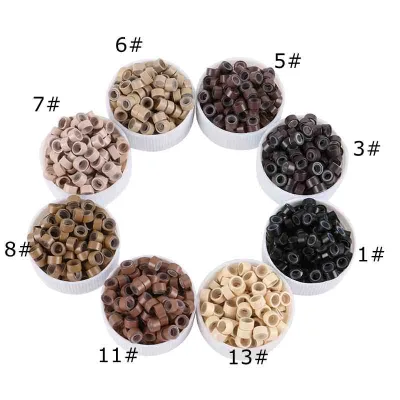
The silicon ring for applying micro ring tip is available in any size to meet specific requirements. Standard model numbers include 4.0mm, 4.5mm, and 5.0mm options. This flexibility ensures compatibility with various micro ring tip applications. Buyers can request custom dimensions if standard sizes do not fit their specific hardware needs.
Can I customize the packaging for the silicon ring for applying micro ring tip?
Yes, customization is available for the silicon ring for applying micro ring tip. The product is packaged in a beautiful bottle, but buyers can request specific packaging details according to their demand. This includes pallet, carton, or plastic bag options. Custom packaging helps protect the product during transit and aligns with brand presentation needs.
What is the supply ability for the silicon ring for applying micro ring tip?
The supply ability is 80,000 bags per week for each size. This high capacity ensures consistent availability for bulk orders. The production type is mass production, which supports large-scale procurement needs. Fast delivery is also highlighted as an advantage, making it suitable for urgent hardware tool and machinery accessory requirements.
Which materials are used for the silicon ring for applying micro ring tip?
The silicon ring for applying micro ring tip utilizes materials such as PTFE, PU, Peep, PC, POM, Nylon, ABS, and Acrylic. These materials are selected for durability and performance in hardware tool and machinery accessory applications. The product also features powder-coated surface treatment for enhanced protection and longevity in industrial environments.
What is the lead time for the silicon ring for applying micro ring tip?
The lead time is fast, with a specific delivery time of 3 days mentioned for certain items. This rapid turnaround supports urgent procurement needs for hardware tools and fasteners. The product is shipped from Xuchang, Henan, China. Buyers can rely on this quick delivery for maintaining inventory levels and meeting project deadlines efficiently.
What colors are available for the silicon ring for applying micro ring tip?
There are 8 colors in stock for the silicon ring for applying micro ring tip. This variety allows buyers to select options that match their aesthetic or functional requirements. The product is categorized under Links, Rings & Tubes. The availability of multiple colors ensures that specific visual preferences can be met without long waiting periods.